Friends — and Russell Peters — said India is smelly.
So naturally, when I stepped off the plane, I took a deep breath.
Friends and Russell Peters clearly haven’t been in a lift full of Chinese people after their lunch break.
Sure, I know. And multiple times I was told: India is filthy. India is not safe. Men ogle at you like a piece of meat. Women get raped. There are laws — but no enforcement. You’ll be ill from everything you eat.
Once upon a time, somebody must have toppled a jar of magic powder and scattered clouds of red, green, purple, yellow — disgust and delirium — all over this wildly, savagely exotic place.
Why would one want to go to India?
Weeks before my trip to Mumbai, the GP gave me countless vaccinations and prattled on about a long list of what-not-to-dos. Then I left the clinic, took a ten-hour flight, and promptly forgot everything she said.
I had ice in my drinks, brushed my teeth with tap water, and devoured street-side, newspaper-wrapped samosas. They were the best samosas I’d ever had.
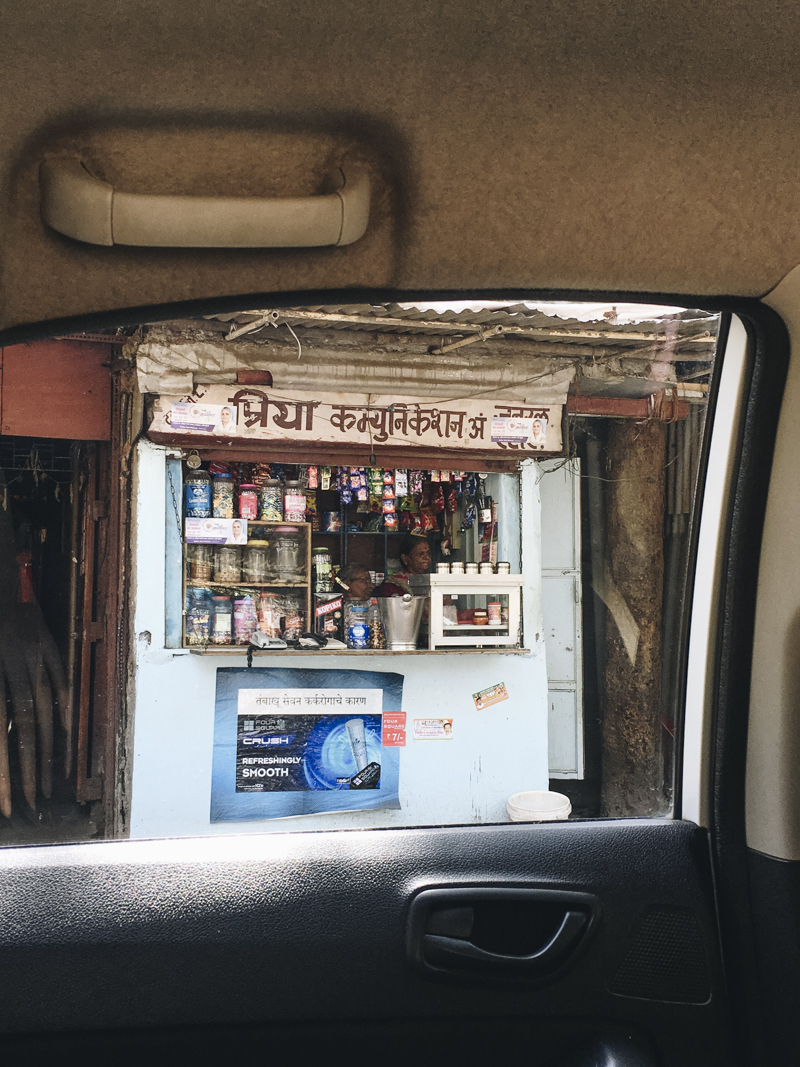
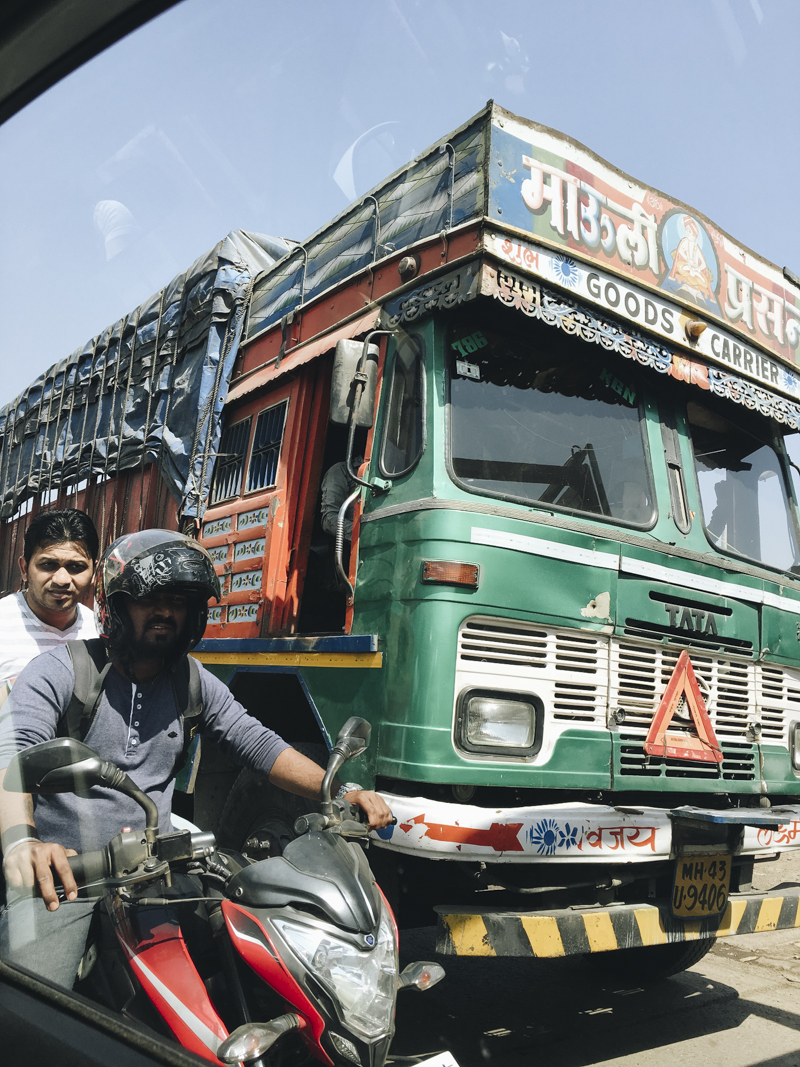
From the international airport to the hotel, I saw people walk across the motorway as though asserting their final thread of civil rights on a zebra crossing. Lorries broke down and remained stock-still, driverless, in the middle of the road. The honking never stopped. Stray dogs and cats roamed the streets like zombies on earth. Buses spat soot.
I tried my hardest to stay awake through the jet lag, with teary eyes irritated by dust and ears ineluctably pierced by shouts in incomprehensible dialects. There was a tornado of violent, irrepressible energy in this place. I couldn’t not be a part of it.
On the second day, on a street behind the five-star Taj Mahal Palace Hotel, we walked past a dark, scraggy woman in an orange saree. She had a tooth that jutted out from her lips, leaving her unable to close her mouth properly.
While travellers and trendy Mumbaikars swigged beer at nearby Colaba Social, and select hotel guests mingled on broad terraces — she begged for money, standing stark against the scene, carrying life’s injustices with her.
You see, Mumbai is a rare bird. It is the largest contributor of tax revenue in the state of Maharashtra, and Maharashtra contributes nearly half of India’s tax. Yet it both shelters and starves one of the largest slums in Asia. How exhilarating — and exasperating — is that?
It is as if the 20 million Mumbaikars live their lives on a bunk bed, with the rich on top and the poor grappling with public sanitation issues, illiteracy, and spousal violence — problems shockingly and widely regarded as norms — at the bottom.
To make matters worse, the caste system, which stormed into the room thousands of years ago, effectively removed the ladder and made it far more difficult for those at the bottom to climb to the upper bed.
It was like a playground bully who arrived and separated the children based on what their parents did and the toys they owned. Social stratification — a cricket ball that smashed Indian society into shards of glass, leaving you bleeding as you tried to piece it back together.
For centuries, the caste system has dictated almost every aspect of a Hindu’s life. It seeps into human psychology: when you create a designated space for people and ease them into a false sense of belonging, that space becomes their comfort zone. It becomes a tool — to protect, to attack, and to influence — the latter especially apparent when politicians aim their manifestos at caste groups. A classic case of divide and conquer. It’s deeply unsettling. It’s that bad.
At sunset, we came across a couple relaxing by the water, watching boats inch slowly towards the Gateway of India. They didn’t speak much. And it struck me that this couple, right in front of me, might be the perfect, quiet embodiment of a nation still shaped by arranged marriages.
At Crawford Market, three generations of vendors huddle together, selling nuts, teas, seeds and spices. Just a few steps away stands a fountain designed by the father of Rudyard Kipling.
Days before the BMC election, supporters flooded the streets, rallying behind municipal candidates. We certainly didn’t get out of the car. This kind of political gusto in India was overwhelming — and, frankly, terrifying.
There were quite a few second-hand booksellers in Colaba. The joy of discovering them — and lugging all seven of my steals back to London — was indescribable.
Arranged marriages, and men who lock hands to parade their brotherhood — tell me, what could be more rebellious in the name of love?
Also had fun stumbling into a shop-disco one fine, drunken night in Bandra West, and striking up an instant rapport with a very confused vegetable seller. The poor man didn’t have a clue what was going on.
Throughout my time in Mumbai, I didn’t see any familiar faces — that is, female, East Asian faces. In a dusty, maddening place like this, the absence of young East Asian tourists is understandable, almost self-explanatory.
But then again, shouldn’t we all travel to see the world as it is, rather than how we want it to be?
The places we go will, inevitably, leave their olfactory traces on our skin. So what if India is smelly? How bad could that really be?
Just go.
Go to India, sweetie.
Pack your common sense and go.
Trust me when I say — there is no other place like this.
With love x
Take a trip back to 2016! This was my original 'About' page—a little time capsule…
Let’s be honest. You don’t come to A Little Farm on the Hill for organic…
Recently, during a late night at work, Bali called and said, “Come see me.” I…
The first time I heard about E&O was, funnily enough, at a countryside pub in…
I’ve tried to explain this place to my friends many times, but they never quite…